
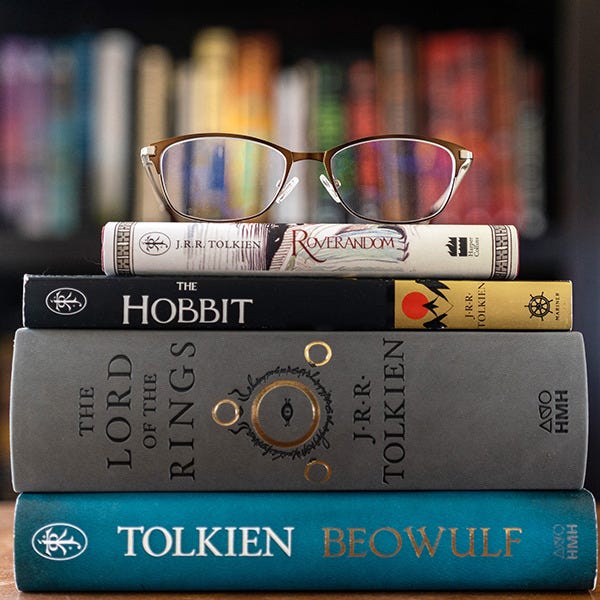
September 22nd was Hobbit Day, or the birthdays of Bilbo Baggins and Frodo Baggins. I celebrated by heading downtown for a dinner of fish & chips and a pint, as I always do. Sometimes I go for a walk afterward, but it was already dark and a bit rainy by the time I left the restaurant so I went home and listened to the audiobook of The Fellowship of the Ring. Whether I have read The Lord of the Rings earlier in the year or not, I always read it again in September and have been doing that for at least the last fifteen years. It’s my favorite book ever, and even if September 22nd wasn’t an auspicious day in the book, it is the perfect story for autumn. The other two books I finished this week are not as comforting as The Lord of the Rings. As we head into fall, I gravitate toward darker books, especially gothic ones. As the days grow cooler and the nights stretch out longer, darker books like these feel like the perfect way to celebrate the coming of my favorite seasons.
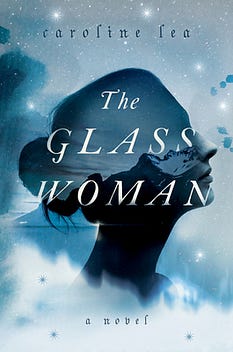
The Glass Woman by Caroline Lea is set in Iceland in 1686. Rósa agrees to marry Jón Eiríksson, a wealthy trader and leader in the community of Stykkishólmur, to provide medicine for her mother and food for the rest of her village. Married life proves to be far less romantic than Rósa hoped for, as Jón is distant and insists she keep away from the people of Stykkishólmur because of their gossiping. There is also a locked room in their home that Rósa is forbidden to enter, though she hears something moving in there by night. Rósa cannot overcome her curiosity, however, for the story of the sudden death and burial of Jón’s previous wife Anna is always in the back of her mind and seems to be part of everything strange about her new home. The more Rósa tugs at the threads of the mysteries around her, the more everyone in Stykkishólmur- especially Jón- seems to have secrets that some would kill to keep. I was wary of this book when I started it. Lea is not Icelandic, and I have encountered too many books where the authors treat other countries like fantasy realms they don’t need to respect. Fortunately, Lea treats Iceland, its people, and history with a good deal of respect, conjuring a story with rich environmental detail, complex characters, and an oppressive gothic atmosphere that often makes you want to bolt outside for a breath of air. A third of the way through the book, I was thoroughly hooked and just wanted to sit down with to find out what was going to happen. I had guessed the major secret of Jón’s life by the midpoint, but I wanted to know what the consequences of that would be if it was revealed to the community. Though the ending was bittersweet, I was thoroughly satisfied by it because it wrapped up all the threads and provided explanations for why everyone was the way they were. I’m glad I listened to the audiobook, which is narrated by Heiða Reed and Smari Gunn, both of whom are Icelandic actors who knew how to pronounce all the Icelandic names. If you’re looking for a cold and atmospheric gothic novel for the darker half of the year, The Glass Woman is an excellent choice.
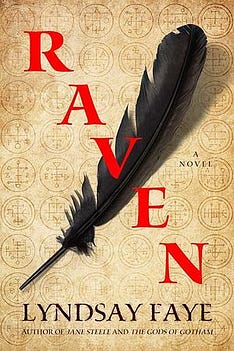
I have loved Lyndsay Faye’s books ever since I stumbled across her Gods of Gotham detective trilogy back in 2014. I read all of her new releases as soon as I could and enjoyed them all, especially her Sherlock Holmes stories and her Hamlet pastiche, The King of Infinite Space. Due to health issues, among other things, Faye did not publish any new books after 2021— until this year. Raven, due out October 6th, is based on the works of Edgar Allan Poe. It is about a young woman, Raven Helen Allan. After the death of her mother, a traveling musician, Raven ends up in the care of her aunt in Baltimore, who is a wealthy widow and laudanum addict, and the enslaved Black family she owns. Raven spends her teenage years reading the occult tomes in her aunt’s library and falls in mutual love with Pym, the daughter of the Black family who has plenty of secrets of her own. When Raven is 23, her aunt’s financial problems force her to seek employment elsewhere, and she takes a position as a lady’s companion to the sickly Lenore Legrand in the crumbling mansion called Moldavia. There, she meets Lenore’s devoted older cousin, Trevanion, who is obsessed with alchemy and is constantly searching for a cure for Lenore’s illness. Raven finds herself drawn to the strange cousins and their oddly magical ways in this gothic tale of witchcraft, alchemy, and obsession. Though I have never truly enjoyed the works of Edgar Allan Poe, I am willing to follow Lyndsay Faye down whatever literary rabbit hole she wants to go down. Unfortunately, Raven didn’t quite work for me. At 464 pages, I thought the story was drawn out longer than it needed to be. The slow pace kept putting me to sleep, and the relevance of the many Poe-related Easter eggs were lost on me since I am not a fan of Poe’s writing. The gothic romance elements didn’t for me, either, but I will admit that I don’t read many romances, gothic or not. Still, Faye’s writing is as elegant as ever, echoing the styles of nineteenth century American novels without feeling like a dry facsimile. While Raven didn’t quite work for me, I am happy to see that Faye is writing again and I look forward to trying whatever else she writes in the future. Note: Raven engages in self-harm throughout the book, so if you are sensitive to that, do be advised. Thank you to NetGalley and Penzler Publishers for the advance ebook for review. Some interesting things I read on Substack this week: 


Traveling in Books is free today. But if you enjoyed this post, you can tell Traveling in Books that their writing is valuable by pledging a future subscription. You won't be charged unless they enable payments.
|




No comments:
Post a Comment