
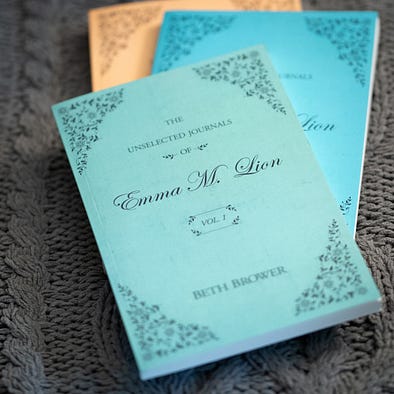
I took an extra day off this week. I intended to get some extra sleep, but my cats had other plans that involved waking me up an hour before my alarm usually goes off because they didn’t want to wait for breakfast. I caved, gave them a snack, and went back to bed fully intending to go back to sleep. Unfortunately, sleeping in was not in the cards. I was up for the day. Despite that, it was a good day. Last summer, a series of severe thunderstorms rolled through the area, damaging trees and homes and knocking out electricity to thousands of people. In a little town nearby, a building housing a row of small businesses was damaged– the western wall pulled away from the main building, forcing the shop on that end to close until the wall could be repaired. That shop was the town’s bookstore, a cute little place that has a good selection despite its size. I’d been there a few times before the storm, but not after. I decided my extra day off would be the perfect day to drive the twenty-five miles to town, have lunch at a nearby cafe, then spend some time browsing. I am happy to report that the bookstore is better than ever. I could be misremembering, but it seemed like the space was bigger, allowing for an expanded children’s section and more room for the young adult and science fiction/fantasy shelves. There were more shelves dedicated to local interests, too. The booksellers were as helpful as ever, and we chatted about Katherine Arden’s The Unicorn Hunters (one of their recent book club picks) and books in general for a while. And though I did not need the reminder that I was in a small town, I got one when a woman came in to drop off a bag of green beans, fresh from the garden, for each of the booksellers. Though I didn’t find anything in the science fiction/fantasy section, I did come across the first three volumes of Beth Brower’s The Unselected Journals of Emma M. Lion, a series I had not heard of until several people in my bookish Discord server started gushing about it. Because we have similar tastes in books, I decided to get those three volumes and give the series a try. According to the bookseller, there are eight volumes out now with a ninth due sometime soon. I am once again deluged by advance copies of forthcoming books so I don’t know when I will get to these, but I’m looking forward to finding out what all the excitement is about.
In my reading this week, I came across an unexpected connection in The Count of Monte Cristo and Richard Davenport-Hines’s Gothic: Four Hundred Years of Excess, Horror, Evil and Ruin, when both books mentioned Lord Ruthven, a character from Caroline Lamb’s gothic novel Glenarvon (which provides an unflattering portrait of Lord Byron) and also in John Polidori’s The Vampyre, which he wrote at the Villa Diodati during the legendary ghost story writing challenge that gave us Mary Shelley’s Frankenstein. Though Polidori’s character was apparently not based on Byron, the two portraits have merged in popular culture, and so Lord Ruthven has become this vampiric, Byronic figure. Alexandre Dumas referenced the character in a chapter of The Count of Monte Cristo, when a countess refers to the count as ‘Lord Ruthven’ due to his pale appearance. It’s a minor connection, but it’s fun when the books you’re reading have unexpected links. I am halfway through The Count of Monte Cristo, and I can’t see yet how Edmond Dantes will spring his vengeful trap on the men who betrayed him at the beginning of the story, but I can’t wait to find out. I usually read two chapters each night before bed, so I will finish sometime in August. I have since finished Gothic, and while I appreciated how Davenport-Hines delved into the history of the genre, I was underwhelmed by his focus on the darkest aspect of the gothic, and said little to nothing of how it also deals with the sublime. And how can a book about the gothic, published in 1998, not mention such basic entries in the category as Jane Eyre, Rebecca, or Beloved? That said, I did appreciate the discussion of the construction of neo-gothic castles by English nobility in Scotland and Ireland in the 1700s-1800s and how they were meant to give a sense of looming English authority over the Scots and Irish in times of unrest. Inveraray and other castles of its kind are beautiful, yes, but they were meant to be another tool of oppression. Two other books I’ve finished recently are The Intrigue by Silvia Moreno-Garcia (ARC provided by NetGalley and Del Rey) and Midnight Never Come (The Onyx Court #1) by Marie Brennan.
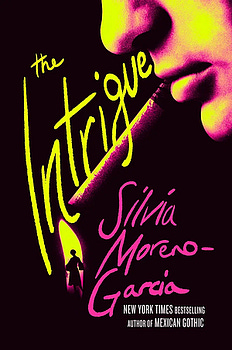
I have read nearly everything Silvia Moreno-Garcia has published, and at this point I don’t really care what genre she decides to explore next. Whether it’s vampiric horror, a magical comedy of manners, or a tale of Hollywood’s golden age, I’m ready to give it a try. This year’s novel, The Intrigue, is a blend of Mexican novelas costumbristas and noirs. In 1940s Mexico, Ulises has nearly reached rock bottom. He is a mid-rate con artist who looks for lonely, wealthy women and poses as a charming potential lover in order to win them over and take their money. He does not have his late father’s charm, however, and has been down on his luck for a while. He decides to try one last time to find his fortune by charming Perla, a spinster in a small backwater town who is desperately trying to hold onto the customs of her family’s formerly wealthy past, and also ensure that her niece, Inés, can never leave so there will be someone to care for her when she is old. Inés soon realizes that Ulises is up to something and convinces Ulises to let her in to his plans so together, they can make a fortune and leave their old lives behind. But Perla is not the simple spinster she appears to be. She harbors secrets of her own, and they make her a formidable opponent. And despite himself, Ulises begins to fall for Inés’ charms. While this book had a somewhat slow start, I was hooked by around the 30% mark and ended up finishing the second half in a single day. Though Inés and Ulises are both kind of awful people, Moreno-Garcia imbues them with the sort of charisma that leaves you hoping they’ll get away with everything they do– and they resort to some very criminal behavior as the story rolls along. The book’s atmosphere is excellent, too, giving you a real sense of place and time. I could clearly picture Perla’s aging house and all the characters who breathed life into the story. Though The Intrigue isn’t my favorite of Moreno-Garcia’s books (that honor goes to Mexican Gothic), it is my favorite of her historical novels. Thanks to NetGalley and Del Rey for the advance copy for review.
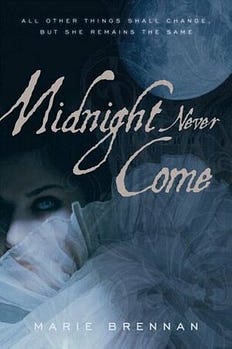
Marie Brennan is underrated as a fantasy novelist. Though her books are full of depth and detail, always have a cast of interesting characters, and are well-plotted and paced, it often seems like no one has heard of her. Last year, I read the entirety of Brennan’s Memoirs of Lady Trent series in about a month and started collecting her Onyx Court books soon after. I finally got around to starting the first of those, Midnight Never Come, recently, and though I wasn’t instantly hooked as I was with the first Lady Trent book, it wasn’t long before I got caught up in the dual courts of Midnight Never Come. In the book’s opening, we are introduced to the Onyx Court, a shadow realm of faerie below London, where the fae are protected from the church bells and faith of the humans above. They do not live in peace, however, for their Queen Invidiana is a fearsome mistress who made a dark pact that keeps her on her throne and allows her to meddle with the affairs of the human world above. Lady Lune, a former courtier of the Onyx Court, is out of favor and struggling to survive when she is given a last chance to serve Invidiana by infiltrating the spy network of Francis Walsingham. This sets her in the path of Michael Deven, a low-ranking courtier of Elizabeth’s and and agent of Walsingham’s. Together, they must solve the riddle of Invidiana’s past and save both the Onyx Court and London itself from falling prey to her schemes. Midnight Never Come is an excellent example of historical fantasy, providing rich, period-based details and bringing figures from the court of Elizabeth I to life without making them seem stodgy or unrealistic. I finished it yesterday and have already begun the second book in the series, In Ashes Lie, which is set around the great fire of London in 1666. In other, non-reading news, I have finished knitting my first pair of socks! They have their problems and they’re a smidgen too tight in the ankles, but they are complete! And they are wearable! My next sock is already on the needles and ready for those bits of spare time when I can sit down and finish a few rows. Though turning the heel is not my favorite thing to do, the rest of the process is so enjoyable that I will put up with it because I get to do all that knitting and have some fun, cozy socks at the end of the process.
Traveling in Books is free today. But if you enjoyed this post, you can tell Traveling in Books that their writing is valuable by pledging a future subscription. You won't be charged unless they enable payments.
|






No comments:
Post a Comment