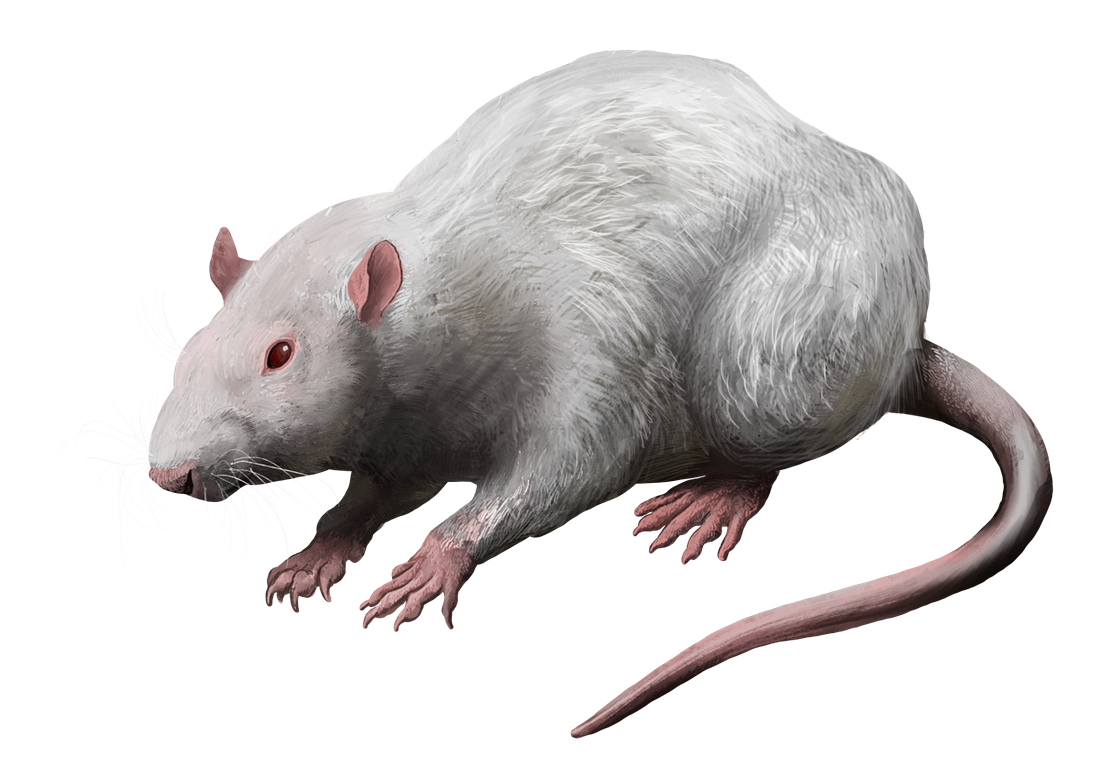
A well-funded behavioral researcher once spared no expense to create a perfect environment for rats. No, this wasn’t a PETA scheme gone wild; it was an important study that could pay off handsomely if life was as simple as research. Rats Kill Themselves on DrugsThe beginning of the story is well known. You take a rat and put him in a cage, give him the choice between drinking life-sustaining sugar water and water that is laced with drugs like cocaine or heroin. Many of the rats will choose the drugs and use them to the extent that they will starve themselves to death. Those results are often cited. They’re told in every high school as a cautionary tale to discourage kids from using drugs. It’s only part of the story, though. Bruce Alexander wanted to know more. The Rat Park ExperimentDr Alexander looked at the cages where researchers were conducting their experiments and said, that’s no place for a rat. Imagine yourself shut up in a wire cage with nothing to do and no one to do it with. Wouldn’t you use drugs then, if only to pass the time? What would happen if the rats were living in rat heaven? Would they still use drugs and kill themselves, doing so? He created Rat Park to find that out. First of all, the individual cages had to go. Rats are social creatures. They need room to play and explore. Get some trees, grass, and line the floor with woodchips so they can make nests. Keep the cats away. Scatter some cans and boxes for them to hide in. Now give them the choice to use drugs. The rats weren’t interested. Who needs drugs when you’ve got wood chips. OK, so next, they got some other rats addicted by the previous method, in the stark, isolation chambers, and then set them free in Rat Park. They’re gunna need rehab, right? They’re not going to be able to stop on their own without methadone or a rat’s version of a twelve-step program. Not so, those rats weren’t any more interested in the drug-laced water than the others were once they became residents of Rat Park. Some say that Alexander’s study demolishes most of the assumptions of drug addiction theory. Rat Park suggests that the desire to use drugs is, indeed, super powerful if you are isolated, alienated, with nothing to do and nowhere to go. If you’re living like a rat in a cage you’ll be inclined to use drugs and probably use those drugs to such an extent that you’ll neglect your basic needs till you die. However, it suggests, if you are in a safe place, around supportive people you love, given the opportunity for meaningful work and creative play, then drugs aren’t going to be that interesting. If you look at what we do to drug addicted people, limit their options and put them in cages when they violate possession laws, you’d say that we make the problem worse. If you look at the way many rehab programs are run, like impersonal boot camps, you’d say we make the problem worse. If you look at the way employers, schools, friends, and family treat the addicted person, like a pariah who you can’t trust, you’d say we make the problem worse. This is madness, you’d say. I agree that we can drive people towards addiction by allowing their environments to deteriorate and we can make the problem worse when we treat people like rats, but I don’t think recovery from addiction is as simple as Rat Park suggests. You see, humans are not rats. Take your typical human and put him in a secure environment with plenty of food and companionship, give him something pleasant to do, tell him that he is loved, that he is forgiven, that he’s the greatest thing since sliced bread. Will he be happy? Maybe for about a week. Then he’ll find something to be miserable about. When a drug addict comes from the inner city or depressed rural areas, both places worse than even a rat’s worst nightmare, then we have something that accounts for their interest in using drugs. But, how do you explain drug addicts who come from comfortable suburbs, from loving families, enjoying every privilege, and anticipating the fulfillment of every dream? How do you account for people being so damn cranky? Why Do You Get So Cranky?It’s one thing to be unhappy when things don’t go your way. But, if you’re human, sometimes you can’t find the good in anything. You seem to love to find something to complain about. We could call this feeling being grouchy, grumpy, critical, crabby, miserable, mean, ornery, bad-tempered, negative, perverse, depressed, or cantankerous; but I’m not happy with any of those words. Oh, all right; let’s just call it cranky. Another way to think about it is like this. You know what it means to wear rose colored glasses? Well, some people figuratively wear shit colored glasses, so everything looks like shit. If you ever want to know what it feels like to be cranky, just go without sleeping or eating longer than you should and then interact with people who are acting kind, considerate, and scintillating. You won’t be able to tolerate those people. You’ll treat them like crap. That’s the feeling, but that’s not really what I’m talking about; because, in that case, you’re in need of sleep or food. I’m talking about when nothing is wrong, but you’re unhappy, anyway. This condition, which has no good name, but what we’ll call cranky, bedevils behavioral science researchers, who tend to assume people will act rationally. I don’t know why they would assume that; look around and you can see plenty of folks acting against their own apparent best interest, but that’s what they assume. Consequently, their theories of human behavior just don’t work in the real world. What is this perverse tendency to be cranky? Do we like it better than happiness? The Chemical Imbalance TheorySome will tell you that when you are being cranky, you’re really just depressed. That is, you have a chemical imbalance in the brain that causes you to look on the dark side of everything. It’s not really your fault, but you can correct the problem and re-balance those chemicals by taking these other chemicals. I’m not opposed to people taking those pills, called anti-depressants, if they help, and often they really do help. They can save lives; for crankiness, when it goes untreated, can be a terminal illness. But, when an anti-depressant works for you, it doesn’t necessarily mean you have depression, that chemical imbalance I was talking about. The chemical imbalance theory: the idea that depression is caused by low serotonin or other neurotransmitter deficiencies was promoted heavily by pharmaceutical companies marketing anti-depressants. However, scientists have yet to find this imbalance, even after decades of research. A comprehensive 2022 review found no consistent evidence that depression is caused by low serotonin levels or activity. Earlier studies tried depleting people’s serotonin to induce depression. It didn’t work. They tried massively increasing serotonin. That didn’t work either. When researchers compared serotonin levels in depressed and non-depressed people, they found no reliable difference. The chemical imbalance theory works best as a metaphor, a simplification that makes it easier to explain psychiatric medication to patients. But it’s not a literal biological fact. This doesn’t mean the pills don’t work; they do help many people. We just don’t actually know how or why they work. Just as aspirin will reduce a fever without fixing the infection that caused the fever, anti-depressants will help lift your depression without healing the depression. What Causes Crankiness When Nothing Causes It?So what does cause crankiness when you can’t point to anything causing it? You’re not hungry. You’re not tired. You’re not sick. Your life circumstances are fine, maybe even good. You’ve checked all the usual suspects and found nothing. Yet there you are, finding fault with everything, rejecting perfectly good options, treating decent people poorly, choosing the sour mood over the sweet one, and maybe, just maybe abusing drugs when you have no need to do so. Science can’t explain this. Behavioral researchers keep expecting you to act in your own best interest, and you keep disappointing them. They build you a Rat Park and you still find something to complain about. They can describe what happens in your brain when you’re cranky, but they can’t tell you why you’d choose it. This is where literature succeeds where science fails. Dostoevsky understood something about human nature that no amount of brain imaging can capture. In Notes from the Underground, he describes a person who has everything, and who chooses misery anyway:
You’re not a piano key; that is to say, an object that can be manipulated. You have a will of your own. It is the preservation of freedom of choice that, at times, is more important than your happiness and well-being.
ConclusionSo, there you have it. You may not be happy with this explanation, but nothing can make you happy anyway if you’re cranky. Crankiness can be how you exercise your freedom of choice, how you express your individuality, and how you keep yourself from being manipulated. Crankiness gives you an advantage over those who would treat you like a piano key, expecting you to sound a particular note whenever they want you to. It makes you unpredictable. It puts them on notice. There’s just one thing I wonder about. The next time you’re feeling cranky for no good reason, try finding something, anything to be grateful for, despite being cranky. Wouldn’t that be a marvelous way to exercise your caprice? ReferencesFor the general early experiments showing isolated rats self-administering drugs to death: Woods, J. H. (1978). Behavioral pharmacology of drug self-administration. In M. A. Lipton, A. DiMascio, & K. F. Killam (Eds.), Psychopharmacology: A generation of progress (pp. 595-607). Raven Press. This is cited as the comprehensive review of “hundreds of experiments” by the end of the 1970s showing that isolated rats, mice, and monkeys would self-inject large doses of heroin, cocaine, amphetamines, and other drugs, often to the detriment of their health. For a specific, frequently-cited study: Bozarth, M. A., & Wise, R. A. (1985). Toxicity associated with long-term intravenous heroin and cocaine self-administration in the rat. JAMA, 254(1), 81-83. This study found that when given unlimited 30-day access, 90% of isolated rats self-administering cocaine died, while 36% of those self-administering heroin died. This was the study that inspired the famous “cocaine rat” Partnership for a Drug-Free America commercial. My phrase “starve themselves to death” is somewhat imprecise. The Bozarth & Wise study notes that heroin rats actually maintained stable body weight and continued grooming; cocaine rats showed more severe deterioration. The deaths were from drug toxicity more than starvation per se, though drug use did interfere with normal functioning. Primary Rat Park citation: Alexander, B. K., Beyerstein, B. L., Hadaway, P. F., & Coambs, R. B. (1981). Effect of early and later colony housing on oral ingestion of morphine in rats. Pharmacology Biochemistry and Behavior, 15(4), 571-576. https://doi.org/10.1016/0091-3057(81)90211-2 Key Citations dismissing the chemical imbalance theory: Moncrieff, J., Cooper, R. E., Stockmann, T., Amendola, S., Hengartner, M. P., & Horowitz, M. A. (2022). The serotonin theory of depression: a systematic umbrella review of the evidence. Molecular Psychiatry. https://doi.org/10.1038/s41380-022-01661-0 Lacasse, J. R., & Leo, J. (2005). Serotonin and depression: A disconnect between the advertisements and the scientific literature. PLoS Medicine, 2(12), e392. The Dostoevsky quote comes from: Dostoevsky, Fyodor. Notes from Underground. Translated by Constance Garnett. New York: Macmillan, 1918. Invite your friends and earn rewardsIf you enjoy The Reflective Eclectic, share it with your friends and earn rewards when they subscribe.
|
Monday, 16 February 2026
What Rats Can and Can’t Teach Us About Addiction






Subscribe to:
Post Comments (Atom)
Epic Fantasy Series by Women, Pt. 1
For when you want a long, long story to get lost in. ͏ ͏ ͏ ͏ ͏ ͏ ͏ ͏ ͏ ͏ ͏ ͏ ...

-
Rex Sikes posted: " Take this quote of William Atkinson Walker's to heart. Understand it and apply it in your life. ...


No comments:
Post a Comment