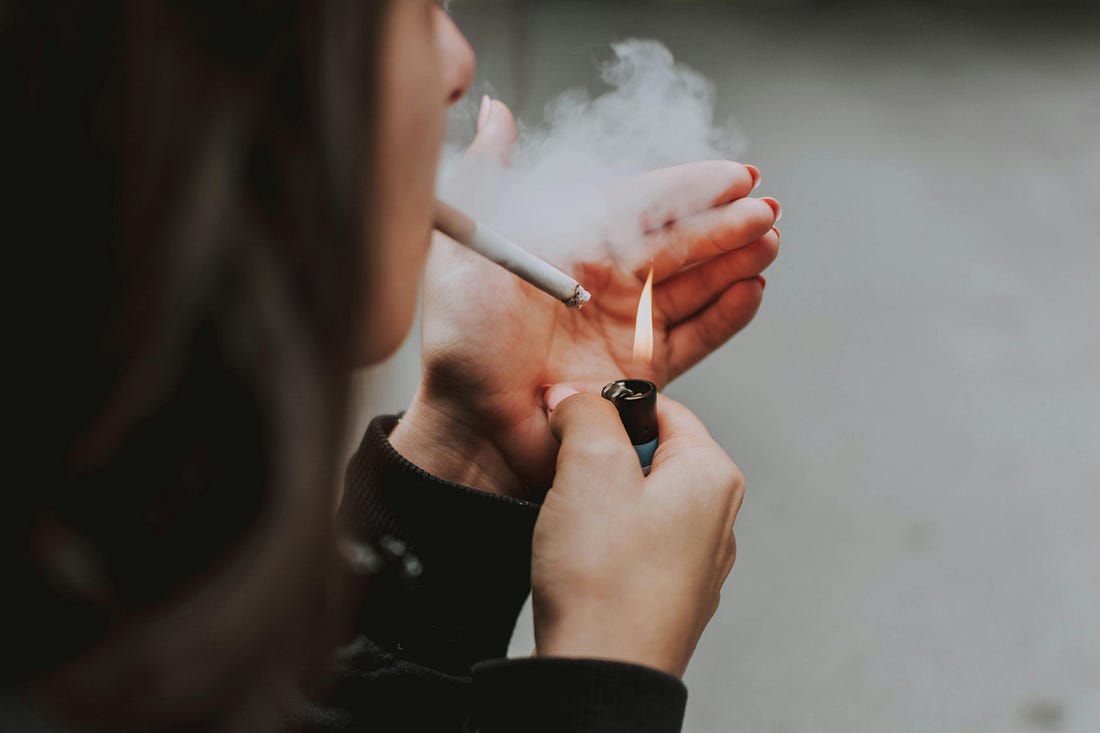
Most people divide substances into two categories: the hard drugs like heroin, cocaine, and crystal meth, and the soft drugs like alcohol, tobacco, marijuana, and prescribed narcotics. Hard drugs are all illegal in the US, they are sold exclusively by underworld organizations, they’re associated with the down and out, are socially unacceptable for most people, quickly lead to poor health, problems at the job, broken homes, and criminal activity as people will lie, cheat, and steal to get their next fix. Any dosage of a hard drug can get you high, whereas most soft drugs can be used without intoxication. All this is true, but it is a mistake to assume that these categories tell you much about addiction. Both soft and hard drugs contain properties that constitute addiction: increased tolerance, withdrawal, and loss of control. Most people who use drugs, soft or hard, will not develop an addiction, but the rates vary dramatically. About 32% of people who try tobacco once go on to become dependent, compared to 23% for heroin, 17% for cocaine, 15% for alcohol, and 9% for marijuana. When a person does develop an addiction, the difficulty of quitting depends on far more than whether we label the drug “soft” or “hard.” People who use soft drugs use them much more frequently, in more settings, and in response to more triggers. For instance, the typical cigarette smoker, using a pack a day, will puff on a cigarette about 200 times a day. He will smoke when he wakes up and when he goes to bed, when he’s on breaks, and after every meal; in the bathroom, in the kitchen, and in the car. He will smoke to be alert and to calm down. He’ll smoke when he gets angry and after sex. Cigarette smoking becomes associated with every part of life. Most of those 200 times a day a tobacco user smokes will be pleasurably reinforcing. He will associate that feeling with relief from a host of issues. Others will accept his use of cigarettes better than they would his use of heroin. Cigarettes will lead to poor health, but it takes years. His boss will give him smoke breaks, his wife will be unlikely to leave him for smoking, and he will not get thrown into jail for possessing a pack of cigs. The typical heroin addict, in contrast, will shoot up no more than 4 to 5 times a day. He will do so only where he can get privacy, in a bathroom, alone in his apartment, or a shooting gallery where no one will judge. He does it for two reasons, to calm down and to avoid withdrawal. Kicking a full-time heroin addiction is hard, make no mistake about it. Withdrawal is painful and risky. But the relapse rates for heroin and cigarettes are remarkably similar, both around 85 to 90%. This isn’t because cigarettes are pharmacologically stronger, but because of how deeply integrated smoking becomes into daily life and how socially acceptable it remains. Get this. In addiction treatment settings, tobacco cessation is routinely ignored, even though tobacco is the substance most likely to kill people in recovery. This happens despite mounting evidence that quitting smoking actually helps people maintain recovery from other substances. Consequently, when addicts in recovery stop using multiple substances, they typically quit the “hard” drugs first and tobacco last and the supposed “soft” drug proves hardest to give up. The same principle of complexity applies when you compare any soft drug to any hard drug. Prescription opioids are chemically similar to heroin but were handed out by doctors. Alcohol kills more people annually than all illegal drugs combined. Methamphetamine exists as both illegal crystal meth and prescription Desoxyn. Legal status doesn’t predict addiction potential or harm. The “soft versus hard” framework is too simple. It confuses legality with safety, and social acceptance with actual risk. Addiction is shaped by the substance itself, how it’s used, who’s using it, and the entire social context around it. Anyone struggling with addiction deserves treatment based on experience, not judgment based on arbitrary categories. ReferencesAddiction rates: Anthony, J. C., Warner, L. A., & Kessler, R. C. (1994). Comparative epidemiology of dependence on tobacco, alcohol, controlled substances, and inhalants: Basic findings from the National Comorbidity Survey. Experimental and Clinical Psychopharmacology, 2(3), 244-268. Relapse rates: Hunt, W. A., Barnett, L. W., & Branch, L. G. (1971). Relapse rates in addiction programs. Journal of Clinical Psychology, 27(4), 455-456. Tobacco-related deaths in alcoholics: Hurt, R. D., Offord, K. P., Croghan, I. T., Gomez-Dahl, L., Kottke, T. E., Morse, R. M., & Melton, L. J. (1996). Mortality following inpatient addictions treatment: Role of tobacco use in a community-based cohort. JAMA, 275(14), 1097-1103. Tobacco cessation deprioritized in treatment: Marynak, K. L., VanFrank, B., Tetlow, S., Mahoney, M., Phillips, E., Jamal, A., ... & Babb, S. (2018). Tobacco cessation interventions and smoke-free policies in mental health and substance abuse treatment facilities—United States, 2016. MMWR. Morbidity and Mortality Weekly Report, 67(18), 519-523. Quitting smoking helps recovery (42% increase): Parks, M. J., Kingsbury, J. H., Boyle, R. G., Helgertz, S., Jenson, D., Saraf, S., ... & Compton, W. M. (2025). Cigarette smoking during recovery from substance use disorders. JAMA Network Open, 8(8), e2527835. Invite your friends and earn rewardsIf you enjoy The Reflective Eclectic, share it with your friends and earn rewards when they subscribe.
|
Monday, 23 February 2026
Rethinking "Soft" vs. "Hard" Drugs






Subscribe to:
Post Comments (Atom)
New post in Shine Magazine
Philippians 4:8 ...

-
Rex Sikes posted: " Take this quote of William Atkinson Walker's to heart. Understand it and apply it in your life. ...


No comments:
Post a Comment