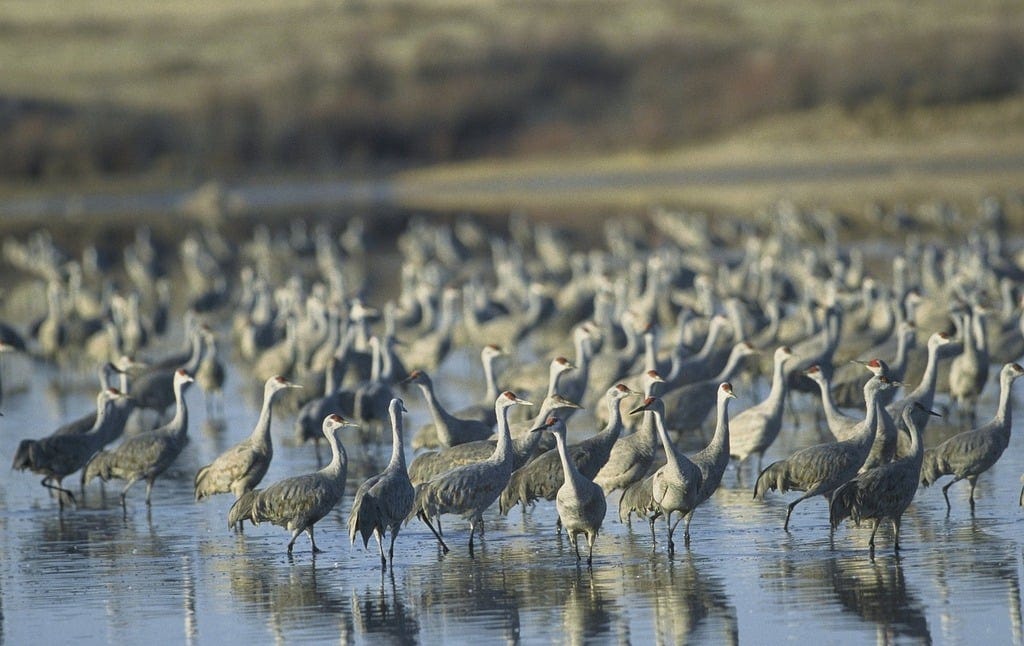
You've tried everything to tame your thoughts. You've battled anxious thoughts with logic, wrestled depressive spirals with positive thinking, and attempted to cage your wildest fears behind walls of denial. Yet here you are, still ambushed by the very thoughts you thought you banished. The problem isn't that you haven't tried hard enough to domesticate them. Thoughts were never meant to come only when called. Maybe, instead of taming the untamable, you should create a wildlife sanctuary for them and let them thrive, similar to what the psychoanalyst, Wilfred Bion¹ proposed for his traumatic memories from World War I. He made a safe refuge for wild thoughts because they serve important functions even when they're uncomfortable. Let's review the journey that brought us here. In Part 1, we discovered that thoughts aren't manufactured products of your mind-factory, but wild creatures living in the ecosystem of your mind. Part 2 revealed how some thoughts dominate entire mental landscapes. In Part 3, we met the ego, the thought of "I", as it attempts to domesticate this mental wilderness. Yet even the most organized mental farm still has weeds. The solution is to create a wildlife sanctuary for the mind. The wildlife sanctuary isn't a place of exile where unwanted thoughts go to die. It's a preserve where wild thoughts can exist in their natural state, neither tamed nor eliminated, but observed and understood. Set BoundariesCreating a wildlife sanctuary in your mind doesn't mean letting dangerous thoughts take over your life. Even Yellowstone has rangers, guidelines, and boundaries, as much to protect the wildlife from people as to protect people from the wildlife. Learn to recognize when your wild thoughts are stirring. Rather than fighting them or fleeing from them, acknowledge their presence and give them space. I'm not talking about surrender; I'm talking sophisticated management. Designate specific times when you sit with dangerous thoughts rather than having them contaminate everything. Establish physical spaces, too; where you encounter difficult emotions without them ambushing you throughout the day. This is the rationale behind customs that prescribe periods of mourning after the death of a loved one or places like a funeral where you are expected to grieve. The idea is that wild thoughts, like wild animals, become more dangerous when cornered. A bear that knows it has an escape route is less likely to attack than one that feels trapped. Similarly, thoughts that know they have a designated space and time are less likely to break out and rampage through your consciousness at inconvenient moments. The Art of Non-InterferenceLearn not to intervene. Park rangers don't rescue every wounded animal or prevent every predator from hunting. The ecosystem has its own wisdom, its own healing mechanisms, its own brutal but necessary cycles. In the mental sanctuary, this means cultivating the ability to remain present with uncertainty, doubt, and partial knowledge without frantically reaching for premature understanding². When grief roots through your consciousness, the ego's first instinct is to fix it, analyze it, or make it go away. The sanctuary approach is different: observe the grief, notice how it moves, what it feeds on, and where it makes its den, without immediately trying to domesticate it. Don't think for a minute this means becoming passive. A good park ranger is attentive, constantly gathering information about the ecosystem's health. They intervene only when the entire system is threatened, not every time an individual creature experiences discomfort. Feeding Stations for Wild ThoughtsEven in wildlife preserves, rangers sometimes provide feeding stations to prevent animals from wandering into human settlements looking for food. The mental equivalent involves creating intentional spaces where wild thoughts can be nourished rather than starved. This means scheduling times for a state of relaxed attention where thoughts could emerge without immediate pressure to be useful or rational³. During these sessions, let your traumatic memories surface, not to process them or make them productive, but simply to acknowledge their presence and their right to exist. Some people create feeding stations in meditation and dreams, others through art, writing, or long walks in nature. The method matters less than the intention. Create regular opportunities for wild thoughts to emerge and be witnessed without immediately being subjected to domestication. The Symbiosis of Wild and TameWild and domesticated thoughts don't just coexist, they actually enhance each other when properly balanced. Bion's unprocessed WWI trauma didn't just disappear into the sanctuary; it informed his clinical work in ways that purely rational analysis never could. The wild thoughts bring something that domesticated thoughts can't: authenticity, emotional depth, and an intuitive understanding of suffering that no textbook could provide. His patients sensed this immediately. They could tell the difference between someone who had learned about trauma and someone who had lived it, survived it, and made peace with its ongoing presence in his mental ecosystem. This symbiosis works both ways. While wild thoughts bring raw truth and emotional intelligence, domesticated thoughts provide structure and communication skills. The sanctuary doesn't eliminate the farm; it compliments it and makes it more complete. When the Sanctuary FailsNot every wild thought can be safely preserved. Some are truly dangerous species that will destroy the entire ecosystem if left unchecked. Suicidal ideation, violent obsessions, or addictive compulsions require aggressive intervention. The art lies in distinguishing between thoughts that are wild but ultimately benign and those that are genuinely dangerous. A grizzly bear in Yellowstone is wild but it belongs there. A grizzly bear in a kindergarten classroom is a crisis requiring a sharpshooter with a tranquilizer gun. Learning this distinction is crucial for the sanctuary approach to work safely and effectively. Wild Thoughts Observed, Back to the Lilly Pads
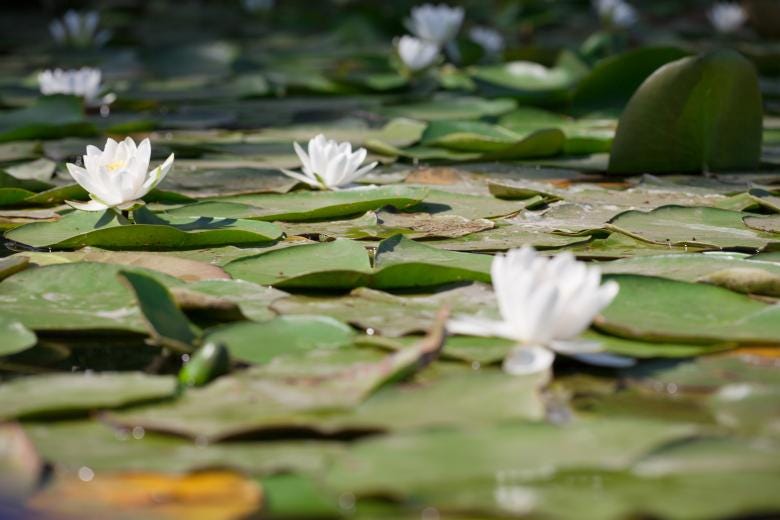
In Part One I told you a story about going for a hike to clear my mind when I was stuck while writing this piece. I had been working hard at the keyboard, trying to train my thoughts about wild thoughts to put on a show for you. It wasn't going well. My thoughts wouldn't line up in sentences and form coherent paragraphs, so I took a break and went into the wildlife sanctuary of my mind. I walked for almost an hour before having any thought I'm able to remember. Then, through a gap in the trees, I unexpectedly came upon the beautiful sight of lily pads in blossom, covering the surface of a pond. I immediately identified the plants and the feeling of joy they gave me, worried the lilies were choking out the pond, but then realized I had an image I could use in my piece. This is a story of an effective use of a mental sanctuary; but in it, I'm still behaving like a farmer who keeps part of his property wild so he can go there and shoot the deer. The deer are not domesticated, like his cattle are, but he's still harvesting them for his own purposes. The scene wasn't allowed to simply be, it had to be useful, had to be captured and brought back to serve my writing project. What if I go to the scene in my mind and re-examine it for whatever I can find? I can use what is called active imagination⁴, allowing wild thoughts to speak as autonomous beings with their own perspectives. Although it insists on tagging along wherever I go, I asked the thought of "I" to desist from its relentless interference. Instead of immediately turning the scene into material for my writing, I told it to simply be present to whatever thoughts came to mind. I made a deal with it to help me write it up, afterwards. After a while, the thought of the pond lilies began to speak. I know plants don't talk, but it was a thought, not actual vegetation, and thoughts do whatever they want. They have a voice like gentle water lapping against the shore; soft, unhurried, wise with the patience of deep roots. They said: "What's the rush? We open when the light is right, close when darkness comes, never forcing what isn't ready." "You say we're beautiful, but we're anchored in the mud, in the dark places you avoid. It's not our shame but our strength. From decay and shadow, we bloom. Your own difficult depths may be where your beauty is rooted." "Notice how we hold the light without grasping it, how we reflect the sky without trying to possess it. The water passes through our world, but we do not try to stop it or direct it. We simply dance with what comes, bending without breaking." "We have watched seasons turn, storms pass, droughts come and go. What seems urgent to you is often just weather to us. Not everything blooms in spring. The most magnificent flowers wait for their moment." "And remember, we are never alone. We are part of something bigger: the pond, the ecosystem, the great web of water and air and light. Your separation from the world around you is more illusion than truth. Float with us for a while, and remember what it feels like to belong." So, you see, not all wild thoughts are snarling beasts, ready to devour you. Some are gentle reveries, too quiet to be heard without listening. The Wisdom of Coexisting with the WildTrying to domesticate everything in your mind is like trying to turn the entire planet into farmland. It's not just impossible; it's counterproductive. Wild spaces are necessary for the health of the whole system. Your anxieties, your grief, your inexplicable longings, your incoherent joys, your ineffable intuitions, your uncomfortable truths don't need to be fixed or tamed. They need to be understood as part of a larger ecology. The goal isn't to eliminate wildness but to create a sustainable relationship with it. This requires a fundamental shift in how we think about mental health. Instead of seeing wild thoughts as problems to be solved, we can learn to see them as natural phenomena that have their own purposes, their own beauty. The advanced farmer of the mind learns to work with these patterns rather than against them. Some seasons are for planting domesticated thoughts, others for allowing wild growth. Some years require aggressive cultivation, others call for letting fields lie fallow. The wise farmer knows that the health of his crops depends not just on his cultivation but on the wildness that surrounds and nourishes his efforts. In the end, this approach preserves not just your wild thoughts, it preserves your humanity. In making space for the untameable aspects of your experience, you remain whole rather than becoming a carefully curated version of yourself. The sanctuary allows you to be both the farmer and the wilderness, both the observer and the observed, both the healer and the wounded. This is perhaps the deepest teaching of the ecosystem of the mind: wholeness doesn't come from perfect domestication but from the wise integration of wild and tame, known and unknown, controlled and surrendered. The sanctuary makes this integration possible, creating space for all the thoughts that make you human, even the ones you'd rather not claim as your own. Conclusion: Living in the EcosystemWe began this journey by abandoning the factory model of mind, where thoughts are manufactured products under your control. Instead, we discovered that your consciousness is a living ecosystem where wild thoughts evolve, reproduce, migrate, and form complex relationships. This shift from owner to ecosystem changes everything about how you relate to your mental experience. In Part 1, we mapped this inner wilderness, identifying the different species of thoughts and their ecological roles. Perceptions feed on sensory input like plants feed on sunlight. Cognitions graze on perceptions like herbivores. Memories decompose experiences into usable nutrients. Feelings pollinate perceptions, spreading them throughout your mental landscape. Critical thoughts prowl as predators, keeping the system honest. When balanced, these create a thriving ecosystem. When imbalanced, they create the conditions for mental distress. Part 2 revealed how some thoughts become invasive species, dominating entire mental territories through adaptation, mutation, reproduction, symbiosis, and migration. Understanding these evolutionary strategies helps explain why certain thoughts seem impossible to eliminate and why trying to suppress them often makes them stronger. In Part 3, we met the ego, the thought of "I", as the ambitious farmer of the mind, attempting to domesticate this wilderness for productive purposes. While the ego can cultivate certain thoughts and establish some order, it remains subject both to the larger ecosystem and to reflection, the apex predator over all thoughts. Part 4 offered a different approach: the wildlife sanctuary, where untameable thoughts can exist in their natural state. This isn't surrender but sophisticated ecosystem management, creating boundaries and feeding stations while allowing natural processes to unfold. So where do you go from here? Start by observing. For the next week, notice your thoughts not as problems to solve but as creatures in their natural habitat. When anxiety prowls through your mind, don't immediately chase it away. Watch how it moves, what attracts it, where it makes its den. When joy alights briefly, observe how it pollinates other perceptions. This kind of naturalist attention is the foundation of everything else. Practice ecosystem thinking. When you feel overwhelmed by a particular thought or emotion, step back and ask: "What's happening in the larger ecosystem?" Is one species dominating? Are the predators preying on your ego? What perceptions are the feelings pollinating? This broader perspective often reveals solutions that targeting individual thoughts cannot. Create your own wildlife sanctuary. Identify which of your thoughts resist domestication and deserve protected space. This might be grief that needs time to move through your system, creative impulses that can't be forced, or old traumas that surface periodically. Set boundaries for when and where you'll encounter these thoughts rather than being ambushed by them. Cultivate symbiotic relationships. Notice which thoughts work well together and deliberately foster these partnerships. Let anxiety team up with preparation. Allow curiosity to collaborate with knowledge. Help self-compassion form alliances with self-awareness. The goal isn't to eliminate difficult thoughts but to help them find productive partnerships. Remember, you are not the dictator of your mind—you are its habitat. Your job isn't to control every thought but to maintain conditions where healthy diversity can flourish. Some days you'll need to be the farmer, cultivating specific insights and pruning unhelpful beliefs. Other days you'll need to be the park ranger, protecting wild spaces and observing natural processes without interference. This ecosystem will never be perfectly balanced. The constant dance between order and chaos, wild and tame, known and unknown is what keeps it alive and adaptive. Your consciousness is not a problem to be solved but a living system to be tended with wisdom, patience, and respect for its fundamental wildness. The thoughts arising in your mind right now as you finish reading this, including any skepticism, excitement, confusion, or recognition, are also part of this ecosystem. They don't belong to you any more than the birds in your backyard belong to you. But like the birds, they have chosen your habitat, and you have the privilege of witnessing their brief visitation. Welcome to your wild mind. The ecosystem has been waiting for you to come home. References for Part 4:
You're currently a free subscriber to The Reflective Eclectic. For the full experience, upgrade your subscription.
|
Monday, 11 August 2025
The Wildlife Sanctuary of the Mind






Subscribe to:
Post Comments (Atom)
Two spots for July
Now is the time. ...

-
Rex Sikes posted: " Take this quote of William Atkinson Walker's to heart. Understand it and apply it in your life. ...


No comments:
Post a Comment